
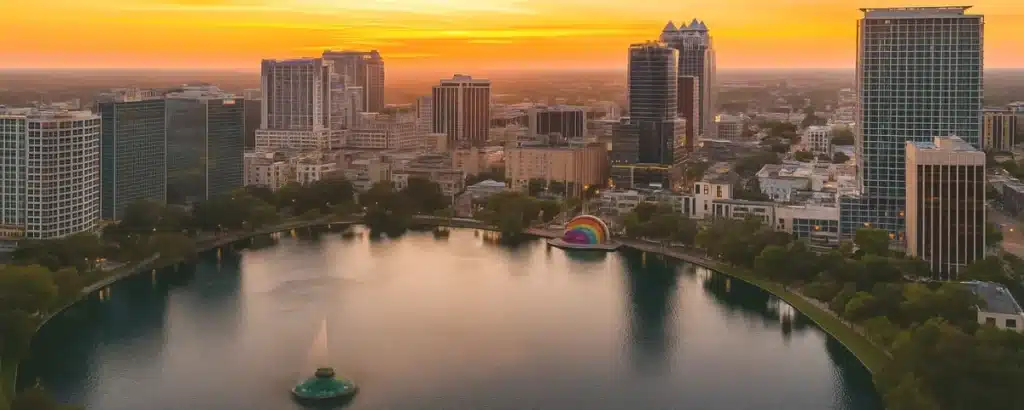
A Guide to Downtown Orlando
Downtown Orlando is the city’s urban center, where residential living, employment, culture, and transit converge in the most concentrated footprint in Central Florida. Anchored by Lake Eola and defined by its skyline, downtown offers a lifestyle built around proximity, walkability, and access rather than space and separation.
While best known for its condominium towers and commercial core, Downtown Orlando also connects directly to established residential neighborhoods just beyond the skyline. This guide explores what downtown living really means, who it tends to attract, and how the area fits into the broader Orlando landscape for buyers considering an urban or urban-adjacent lifestyle.
Why Downtown Orlando?
Downtown Orlando appeals to buyers who want to live at the center of activity rather than around it. This is where work, entertainment, public spaces, and cultural venues intersect, creating a lifestyle that feels distinctly metropolitan by Florida standards. For professionals, downsizers, and second-home buyers who value efficiency and access, downtown offers clarity of purpose: fewer miles, fewer compromises, and more connection to daily life.
Housing in the urban core is dominated by mid-rise and high-rise condominiums, which attract residents seeking a lock-and-leave lifestyle with lower maintenance and built-in security. Many downtown residents prioritize walkability to offices, restaurants, events, and Lake Eola over yard space or larger lots. The result is a community shaped more by pace and proximity than by square footage.
Downtown Orlando is not designed to feel quiet or insulated. It is designed to feel active, connected, and evolving. For the right buyer, that energy is a defining advantage.
Lifestyle and Day-to-Day Living
Daily life downtown revolves around access. Grocery stores, fitness studios, coffee shops, dining, and green space are often within walking distance, particularly near Lake Eola and the core residential corridors. Weekends frequently center on events, farmers markets, festivals, and outdoor activities rather than long drives or home maintenance projects.
For residents with demanding schedules or frequent travel, downtown living offers flexibility. Building amenities, secured parking, and managed common areas reduce time spent on upkeep and increase freedom to move through work and personal commitments with ease.
Housing and Architecture
Downtown Orlando’s housing stock consists primarily of condominiums, ranging from newer glass-and-steel towers to established high-rise buildings and smaller boutique developments. Floor plans vary widely, from efficient one-bedroom units to expansive residences with skyline and lake views.
Buyers should expect meaningful differences between buildings in terms of age, construction quality, amenities, HOA structure, and management. Some buildings emphasize luxury services and shared amenities, while others prioritize simplicity and value. Evaluating these distinctions is essential when comparing pricing, monthly costs, and long-term ownership expectations.
Work, Commute, and Connectivity
Downtown Orlando functions as a regional employment hub, home to government offices, legal and financial firms, healthcare organizations, creative industries, and professional services. Many residents work within the downtown core or nearby areas such as Winter Park, College Park, and SoDo, keeping commute times short and predictable.
SunRail access, proximity to I-4, and direct routes to surrounding neighborhoods give downtown residents flexibility when work or lifestyle pulls them beyond the core. Orlando International Airport is typically a 25–30 minute drive, depending on traffic patterns.
Culture, Events, and Things to Do
Lake Eola Park anchors downtown’s cultural and social life, hosting year-round events, outdoor performances, and recreational activities. Beyond the park, downtown provides access to sports venues, performing arts centers, museums, and an expanding food and nightlife scene.
As new residential and mixed-use developments continue to reshape the urban core, downtown remains one of the most dynamic parts of the Orlando metro. For buyers who value being part of a living, changing city rather than a finished suburb, this evolution is a long-term draw.
Downtown Orlando’s Residential Edge Neighborhoods
While Downtown Orlando is best known for its condominium towers and commercial core, several established residential neighborhoods sit just outside the skyline and are often considered part of the broader downtown experience.
Areas such as Eola Heights, Lake Lawsona, Lake Copeland, and Washington Park offer a different version of downtown living. These neighborhoods feature single-family homes, historic bungalows, and quieter residential streets while maintaining close proximity to Lake Eola, downtown offices, and cultural venues. Many residents can still walk or bike into the urban core for work, dining, or events.
For buyers who want downtown access without high-rise living, these neighborhoods provide a compelling middle ground. They are frequently compared alongside Thornton Park, Delaney Park, and parts of College Park when evaluating downtown-adjacent options.
Downtown Orlando Compared to Nearby Neighborhoods
Buyers often compare Downtown Orlando with Winter Park, College Park, and Thornton Park. While those areas offer more traditional neighborhood layouts, lower density, and single-family housing, downtown stands apart for its vertical living, walkability, and concentration of amenities.
The decision typically comes down to lifestyle preference. Buyers prioritizing space, quiet streets, and architectural variety often look outward, while those prioritizing access, efficiency, and an urban rhythm tend to focus on downtown and its immediate edges.
Things to Consider Before Buying Downtown
Downtown living comes with trade-offs. HOA dues, parking arrangements, building rules, and amenity structures vary significantly and require careful review. Noise levels, event traffic, and density are part of the downtown experience and should align with a buyer’s expectations.
Insurance considerations, reserve funding, and building maintenance history are particularly important in condominium and high-rise environments. Buyers who approach the process with clear priorities and thorough due diligence tend to have the strongest long-term experience.
Is Downtown Orlando the Right Fit?
Downtown Orlando works best for buyers who value proximity, pace, and participation in city life. It is a strong fit for professionals, downsizers, and second-home buyers who want convenience without suburban sprawl. For those seeking larger lots, quieter streets, or detached single-family living, other Orlando communities may be a better match.
Understanding how downtown fits into the broader Orlando landscape is the key to making a confident and informed decision.
A Thoughtful Next Step
Downtown Orlando offers a range of living experiences, from high-rise condominium towers in the urban core to established residential neighborhoods just beyond the skyline. Whether it’s the pace of city life, proximity to work and culture, or the appeal of downtown-adjacent neighborhoods, the right fit depends on how you want your daily life to function.
If you’re weighing Downtown Orlando against other nearby communities or want to understand how specific buildings, neighborhoods, or price points compare, having a local, data-backed perspective can make the process clearer. Exploring the options with context often reveals which environments align best with your priorities, both now and over the long term.
When you’re ready to dig deeper, I’m happy to help you evaluate how Downtown Orlando fits into your broader plans.